
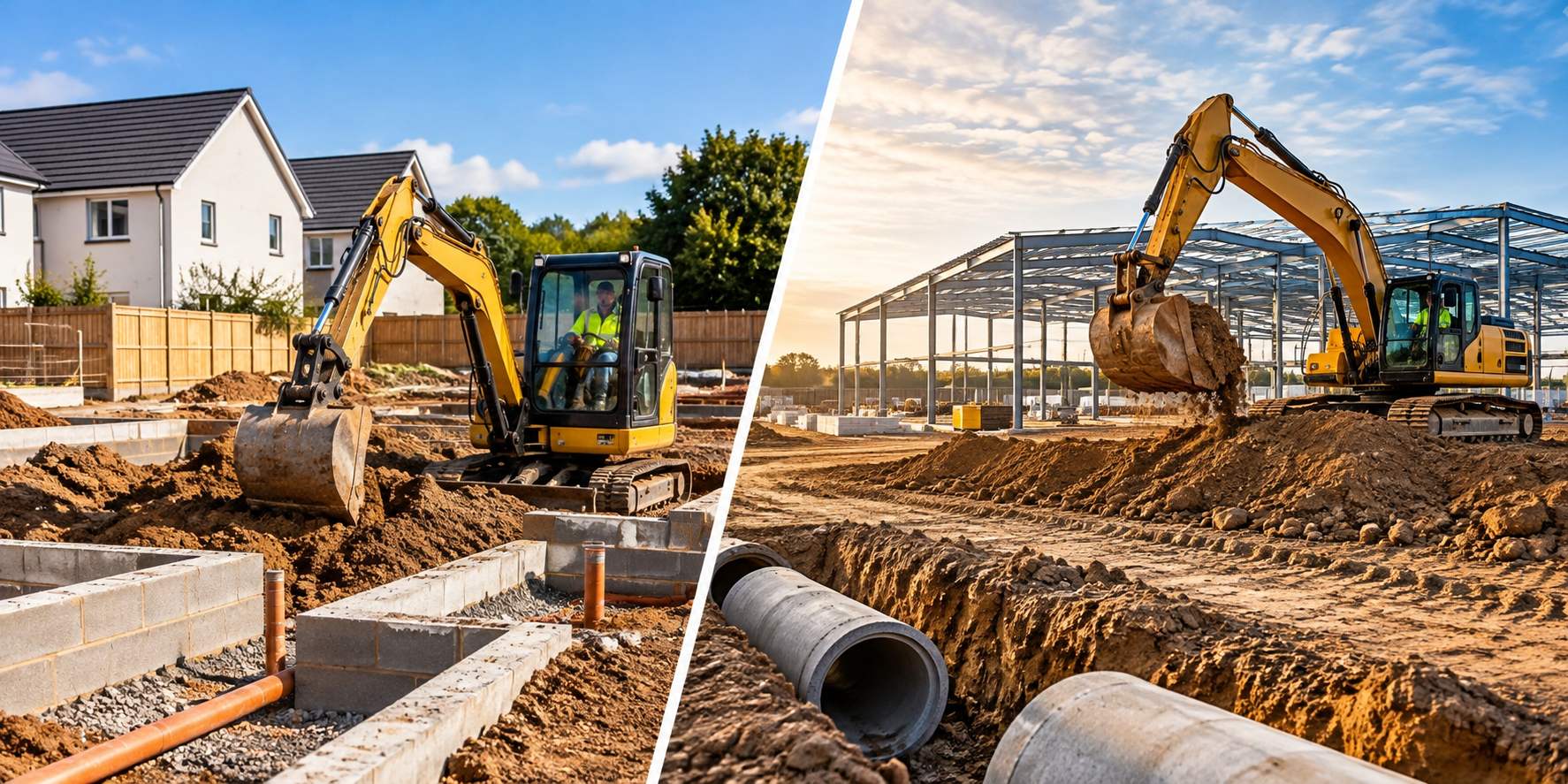
Groundworks are an essential part of almost every building project. Whether you are building a new home, extending an existing property or developing a commercial site, the quality of the groundworks can have a significant impact on the success of the project.
However, residential and commercial groundworks construction involve different requirements, planning considerations and site preparation needs. Understanding these differences can help property owners, builders and developers choose the right groundworks contractor for their projects.
At J Legg Plant Hire & Groundworks, we provide professional groundworks and plant hire services across Devon and Cornwall, supporting projects of different sizes and requirements.
In this guide, we explain the main differences between residential and commercial groundworks, the services involved and what to consider when planning your next project.
What Is Groundworks Construction?
Groundworks construction involves preparing and developing the ground before and during the early stages of a building project. These activities create a stable foundation for the structures, access routes and infrastructure that follow.
Depending on the project, groundworks may include:
- Site clearance and vegetation removal
- Excavation and earthmoving
- Ground levelling and preparation
- Foundation excavation
- Drainage installation
- Soil removal and site preparation
- Concrete bases and hardstandings
- Driveway and access road preparation
- Tarmac surfacing and other external groundworks
The exact requirements depend on the site conditions, the proposed development and the type of structure being built.
Professional groundworks help prepare the site for the next stages of construction, reducing the risk of avoidable problems and helping work progress efficiently.
What Are Residential Groundworks?
Residential groundworks are carried out on domestic properties and housing developments. These projects range from small garden improvements to new-build homes, property extensions and larger residential developments.
The work is generally planned around the requirements of individual properties, available access and the needs of homeowners or residential builders.
Common Residential Groundworks Services
1. Foundation Excavation
Foundations provide support for buildings and must be prepared according to the design, ground conditions and structural requirements of the project.
Groundworkers excavate the required areas to the specified dimensions and depths before the foundation work proceeds.
2. Drainage Installation
Effective drainage is important for managing wastewater and surface water around residential properties.
Groundworks may include excavating trenches for drainage pipes, preparing pipe bedding and installing drainage systems in accordance with the approved design and applicable requirements.
3. Site Clearance and Levelling
Before construction begins, a residential site may require vegetation removal, the clearance of unwanted materials and the levelling of the ground.
Proper preparation helps create a suitable working area for construction and landscaping.
4. Driveways and External Surfacing
Residential groundworks can also include preparing driveways, pathways, parking areas and garden access routes.
Depending on the project, this may involve excavation, sub-base preparation, levelling and the installation of tarmac or concrete surfacing.
5. Garden and Property Improvements
Smaller residential projects may involve removing unwanted soil, levelling uneven ground, improving access or preparing areas for landscaping and other external improvements.
Key Considerations for Residential Groundworks
Residential projects often need to account for:
- Restricted access to gardens and properties
- Nearby buildings, fences and boundaries
- Existing drainage and underground utilities
- The protection of surrounding areas
- Limited space for machinery and excavated materials
- The homeowner’s budget and project schedule
Choosing appropriate machinery and planning the work carefully can help minimise disruption to the property and surrounding areas.
What Are Commercial Groundworks?
Commercial groundworks support the construction and development of business premises, industrial units, warehouses, agricultural facilities, retail buildings and other non-domestic sites.
These projects may involve larger areas, heavier machinery, greater volumes of excavated material and more complex coordination between contractors.
The scope of work depends on the development, site conditions and engineering specifications.
Common Commercial Groundworks Services
1. Large-Scale Site Clearance
Commercial development sites may require extensive vegetation removal, the clearance of existing materials and preparation of large areas of land.
Efficient site clearance helps create a suitable working environment for subsequent construction activities.
2. Excavation and Earthmoving
Commercial sites may require substantial excavation and movement of soil to achieve the required levels and profiles.
This work can include cutting, filling, ground levelling and preparing areas for foundations, access routes and external infrastructure.
The appropriate machinery depends on the scale of the excavation, ground conditions and site access.
3. Foundations and Concrete Bases
Commercial buildings and industrial facilities require foundations and bases designed to suit their intended use and structural requirements.
Groundworks contractors prepare the excavation and formation levels in accordance with the project specifications before the relevant foundation or concrete works proceed.
4. Commercial Drainage
Commercial developments may require drainage systems designed to manage wastewater and surface water across larger sites.
Groundworks can include trench excavation, pipe installation and preparation for associated drainage infrastructure.
Drainage requirements should be established through the appropriate site assessments and design process.
5. Access Roads and Hardstandings
Commercial premises often need durable access routes, parking areas and hardstandings for vehicles, deliveries and equipment.
Ground preparation may include excavation, sub-base installation, levelling and preparation for the specified surfacing material.
The required construction will depend on expected traffic, loading requirements and the intended use of each area.
Key Considerations for Commercial Groundworks
Commercial projects often involve additional considerations, including:
- Larger working areas and greater excavation volumes
- Heavy plant and machinery requirements
- Access for delivery vehicles and construction equipment
- Coordination with other contractors
- Project deadlines and construction schedules
- Ground conditions and existing site infrastructure
- Health and safety arrangements
- Drainage, environmental and planning requirements
Careful planning and coordination are important for keeping commercial groundworks organised and ensuring that the prepared site meets the project’s requirements.
Residential vs Commercial Groundworks: The Main Differences
Although residential and commercial groundworks share many of the same fundamental activities, the scale and complexity of the work can differ considerably.
| Feature | Residential Groundworks | Commercial Groundworks |
|---|---|---|
| Typical projects | Houses, extensions, gardens and driveways | Industrial units, business premises and commercial developments |
| Project scale | Usually smaller or property-specific | Often larger, covering extensive areas |
| Machinery | Selected to suit domestic access and excavation needs | May require larger or heavier machinery |
| Excavation | Foundations, drainage and localised site preparation | Larger excavations, earthmoving and site formation |
| Drainage | Systems serving individual properties or housing projects | Systems serving commercial buildings and wider site areas |
| Surfacing | Driveways, paths and domestic parking areas | Access roads, loading areas and commercial hardstandings |
| Site access | Can be restricted by houses, walls and gardens | May involve construction traffic and larger delivery vehicles |
| Coordination | Often focused on the homeowner, builder and relevant trades | May involve several contractors, engineers and project managers |
These are general distinctions rather than fixed rules. A large residential development can require extensive machinery and coordination, while some commercial projects may be relatively small.
The right groundworks approach depends on the actual project requirements, not simply whether the property is residential or commercial.
Which Type of Groundworks Do You Need?
The best starting point is to identify the purpose of your project and the work required to prepare the site.
If You Are Planning a Residential Project
You may need residential groundworks if you are:
- Building a new home
- Extending an existing property
- Installing or replacing a driveway
- Preparing a garden for landscaping
- Improving access around your property
- Installing new drainage
- Preparing foundations or concrete bases
Discussing your plans with an experienced contractor can help establish the excavation, machinery and ground preparation required.
If You Are Planning a Commercial Project
Commercial groundworks may be required for:
- New business premises
- Industrial or warehouse developments
- Commercial parking areas
- Access roads and vehicle hardstandings
- Agricultural buildings and facilities
- Large-scale site clearance
- Commercial drainage and foundation preparation
For these projects, it is particularly important to establish the site specifications, access arrangements, expected workloads and construction programme before work begins.
Why Ground Conditions Matter for Both Types of Projects
One of the most important factors in any groundworks project is the condition of the site itself.
Two projects of similar size can require very different approaches depending on the ground conditions.
Factors that may affect the work include:
Soil type: Different soil types behave differently during excavation and construction. The ground conditions influence how the site should be prepared.
Ground levels: Sloping or uneven sites may require additional excavation, filling or levelling.
Drainage: Existing water conditions and the proposed drainage design can affect excavation and site preparation requirements.
Underground services: Existing water pipes, electricity cables and other utilities must be identified and appropriately considered before excavation begins.
Access restrictions: Narrow entrances, surrounding buildings and limited working space may influence the machinery that can be used.
Existing structures: Removing or working around existing structures may require additional planning and coordination.
For projects where ground stability or structural performance is a concern, suitable site investigations and professional engineering advice may be necessary before work proceeds.
Choosing the Right Groundworks Contractor
Selecting a suitable groundworks contractor is an important decision for both residential and commercial projects.
Before appointing a contractor, consider the following factors.
1. Relevant Experience
Look for a contractor with experience appropriate to the type and scale of work you need.
Foundation excavation, drainage installation, site clearance and surfacing all involve different practical requirements.
2. Suitable Machinery
The right plant and equipment can help improve efficiency and ensure the work is suited to the site.
Machinery requirements should be assessed against excavation depth, site access, ground conditions and the volume of material to be moved.
3. Clear Communication
Discuss the project scope, access arrangements, expected timescales and any potential site restrictions before work begins.
Clear communication helps everyone understand the work involved and reduces the likelihood of misunderstandings.
4. Health and Safety
Groundworks can involve excavation, heavy machinery, underground utilities and moving materials.
Check that appropriate risk assessments, safe working procedures and relevant site safety arrangements are in place for the project.
5. A Clear Quotation
Ask for a quotation that explains the work included and identifies any important assumptions or exclusions.
Depending on the project, you may also need to clarify who is responsible for waste removal, materials, drainage components and any additional work identified after excavation begins.
Groundworks Services Across Devon and Cornwall
Whether you are preparing a residential property or developing a commercial site, choosing the right approach to groundworks can help establish a sound starting point for the construction work that follows.
J Legg Plant Hire & Groundworks provides groundworks and plant hire services across Devon and Cornwall, supporting a range of projects with practical site preparation and excavation services.
Our services include:
- Groundworks and excavation
- Residential groundworks
- Commercial groundworks
- Drainage installation
- Foundation excavation
- Site clearance and preparation
- Tarmac surfacing
- Concrete surfacing and hardstandings
- Plant hire for suitable projects
Based in Callington, we serve customers in areas including Plymouth, Saltash, Tavistock, Liskeard, Launceston, Bodmin, Truro and Exeter, subject to project requirements.
Whether you need ground prepared for a home improvement project or are planning groundwork for a commercial development, we can discuss your requirements and help you determine the work needed.
Frequently Asked Questions
What is the difference between residential and commercial groundworks?
Residential groundworks generally support domestic properties, including houses, extensions, gardens and driveways. Commercial groundworks support business premises, industrial facilities and other non-domestic developments. Both may involve excavation, drainage, foundations and site preparation, but the scale and technical requirements can vary.
Are commercial groundworks more expensive than residential groundworks?
Not necessarily in every case. Costs depend on the scope of work, ground conditions, excavation volumes, machinery, materials, access and project specifications. A small commercial project may cost less than a complex residential development.
Do residential and commercial groundworks use the same machinery?
Some machinery is suitable for both types of projects. The equipment selected depends on site access, excavation requirements, ground conditions and the volume of material to be moved.
How long do groundworks take to complete?
Timescales vary according to the size of the site, the work involved, weather conditions, ground conditions and any unexpected issues. A contractor can provide a more realistic estimate after reviewing the project requirements.
Do I need a groundworks contractor before building work begins?
For many projects, groundworks must be completed before the main construction activities can proceed. The exact sequence depends on the building design, site conditions and construction programme. It is sensible to discuss groundworks requirements early in the planning process.
Can one contractor handle excavation, drainage and surfacing?
Some groundworks contractors offer several of these services. Confirm the contractor’s capabilities and agree on the scope of work before proceeding.
Plan Your Next Groundworks Project
Residential and commercial groundworks share the same essential purpose: preparing the site for the construction or improvement work that follows. However, the right approach depends on the project’s size, ground conditions, access requirements and intended use.
By understanding these differences and selecting a suitable contractor, you can plan your project more effectively and establish a clear scope of work from the outset.
Planning residential or commercial groundworks in Devon or Cornwall?
Contact J Legg Plant Hire & Groundworks to discuss your project and request a quotation.
📞 Phone: 07577 490672
📧 Email: jleggplant@hotmail.com
🌐 Website: https://jleggplanthire.co.uk/